

How much is the average American spending on higher education? This infographic breaks down the real costs of college, from tuition to travel, and the realities of student loan debt.
Most wealthy, high-achieving students (those with SAT or ACT scores in the top 10 percentile) apply to several colleges with median SAT scores close to their own, along with reach and safety schools. This gives them the ability to choose from different schools, compare financial aid packages, and select the best college fit and value.
But the story is different for high-achieving, low-income students. According to Slate, 53% percent of these students apply to zero schools whose median SAT or ACT scores are similar to their own, and most apply only to a single unselective school. Only an estimated 8 percent mimic the behavior of wealthier high-achieving students by applying to several selective schools, including some reaches and safeties.

With college costs constantly rising, some students are scared off by the high cost of attendance of many colleges–sometimes $60,000 per year or more. But the majority of students don’t actually pay full price. This awesome infographic explains why you shouldn’t let a high sticker price stop you from applying to a school.
Social media sites aren’t just a way to scope out your new roommate or make friends before setting on a college campus. Using these sites can also be a great way to navigate complicated aspects of the financial aid process.
So you’ve been accepted to your dream school. The only problem is, there’s no way you’ll be able to afford to attend based on the financial aid package you have received. Is all hope lost? Not necessarily. Can you negotiate for a better deal? While some schools refuse to negotiate financial aid packages with students, […]
A 529 plan is an investment plan that allows families to put aside money tax-free and use it to pay for educational expenses later. It sounds like a great idea, but it’s not the right choice for every family and could actually reduce your eligibility for financial aid later. Read on to learn about the benefits, drawbacks, and things to consider before investing in a 529 plan.
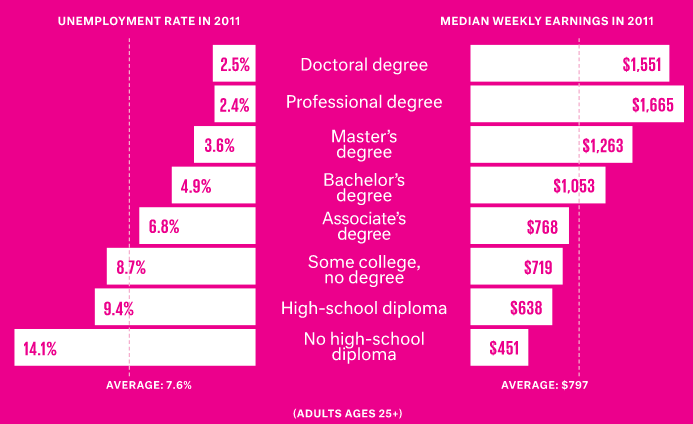
With all the talk about surging college student debt and student loan delinquencies, you might be wondering whether college is worth the investment at all.
Despite the dreary economic outlook and rising tuition costs, attending (and graduating from) college and professional schools pays off. The chart above shows the economic benefits and unemployment rates for various levels of educational achievement.
Not sure how you’re going to pay for college? Here are 5 useful tips for preparing for the cost of college and minimizing your student loan debt. Tip #1: Be self-reliant. It’s a great idea to get a job during high school and start saving early to have backup funds in preparation for college expenses. Remember, […]
Many students and their families worry that applying for financial aid could hurt their chances of being admitted to colleges. Unfortunately, many schools do take financial need into account when evaluating students for admissions. According to the New York Times, most colleges and universities in the United States today are considered “need-aware.” This means they […]