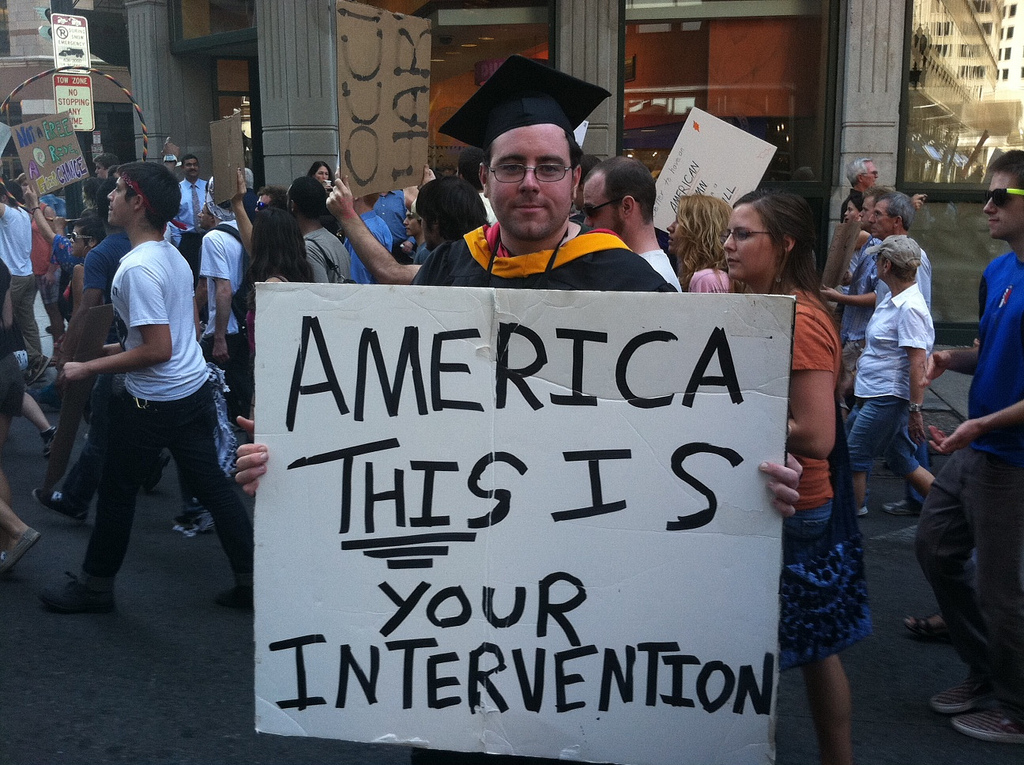
Hechinger Report recently published a great opinion piece from Karen Gross on the ‘flawed conversation’ regarding the cost of higher education. She says that too much public focus is placed on the hard costs of college, and not enough on the repercussions of taking out student debt and alternative repayment options for students. We couldn’t agree more with her claims. […]
And you thought undergraduate student loan debt was bad.
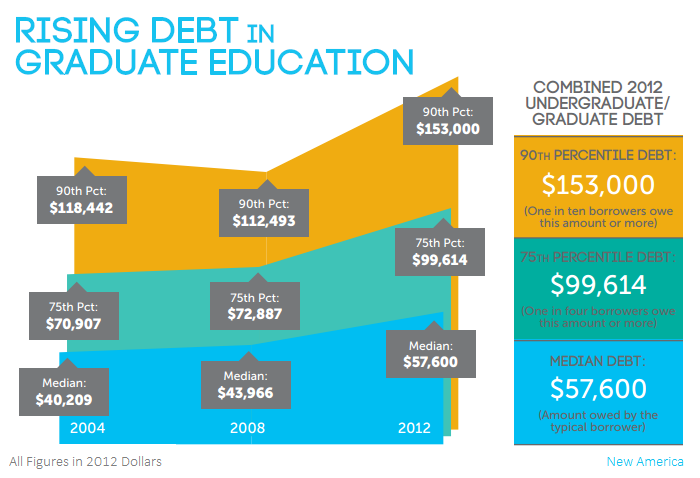
According to a new report by the New America Foundation, the median debt load for borrowers leaving school with a master’s, medical, law or doctoral degree was $57,600 in 2012–about twice the average amount today’s typical undergrad leaves college with.
This represents a 43% increase from 2004 to 2012 when adjusted for inflation.
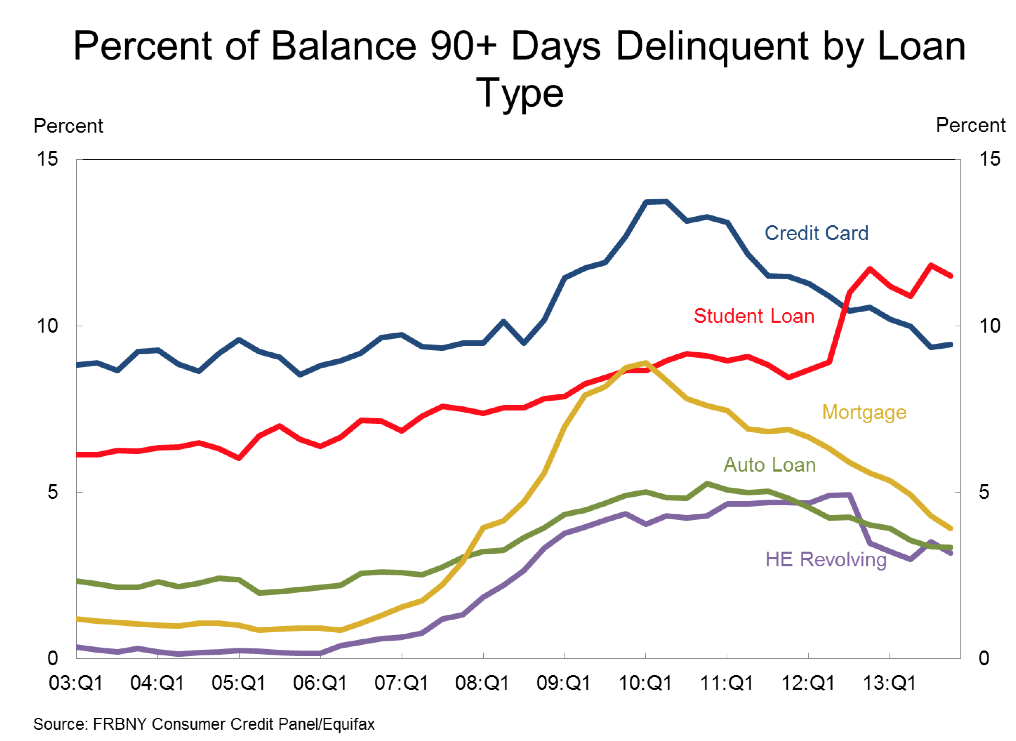
More bad news for student loan borrowers: student loan debt is growing faster than any other type of debt–and more and more borrowers are falling behind on their payments.
According to the most recent consumer debt report by the Federal Reserve Bank of New York released on February 18, 2014, student loan debt is outpacing debt from credit cards, mortgages, auto loans, and HE Revolving loans.
And that’s not all–the percentage of student loans that are 90+ days delinquent is growing fastest as well.
Jennifer Lawrence might be America’s BFF, but Senator Elizabeth Warren (D-Massachusetts) is the modern college student’s best ally. Her latest student loan proposal aims put a large dent in the nation’s current $1.2 trillion student loan debt and provide relief for struggling borrowers. Student loan plan could save borrowers $1,000/year As part of the plan, current student loan borrowers […]
Imagine if you took out $30,000 for college and that’s all you had to pay back. For most student loan borrowers, that’s not the case. Due to compound interest, that $30,000 can easily turn into $40, $45, $50,000 or more by the time the graduate has paid it off. The burden of student loan interest […]
In a press release issued February 25, student loan servicer Sallie Mae announced that it will separate into two distinct companies—Navient and Sallie Mae—in fall 2014.
If you have a loan through Sallie Mae, there may be some changes, but the federal government assures borrowers the changes will be minimal, and no changes will occur until later this year.
Here are the 6 things you need to know if you have a student loan serviced by Sallie Mae.

We see a lot of students get their heart set on one particular college, only to end up disappointed when they realize they can’t afford it.
As much as parents may try to reason with starry-eyed students, it can be difficult for 17- and 18-year-olds to understand the long-term impact of significant college debt.
This infographic from Affordable Online Colleges shows the benefits of looking beyond your dream school and remembering that prestige isn’t everything when it comes to choosing a college.
What is student loan consolidation and how does it work?
We love this video from StudentLoanConsolidator.com, which explains the process in a unique way–by using Play-Doh to represent student loan consolidation.
Compared to private student loans, whose interest rates vary depending on the borrower’s credit history, federal student loans are a steal. But according to USA Today, a large percentage of private loan borrowers don’t maximize their borrowing of federal student loans.
In fact, the newspaper found that more than half of private loan borrowers failed to max out on federal student loans, and a quarter didn’t take out any federal loans.
This is quite alarming and demonstrates the need for education about the differences between federal and private student loans. Unlike federal student loans, private student loans can have variable interest rates, some greater than 18%. This substantially increase the total amount you repay.

Getting ready to go to college or have a child who is? It’s time to fill out the Free Application for Federal Student Aid (FAFSA).
Many parents and students have misconceptions about what the FAFSA is and who should fill it out. Some families don’t bother because they assume they make too much money to qualify for federal aid.
But confusion about the FAFSA can cost you–you may lose out on financial aid, including grants, scholarships, and student loans.