
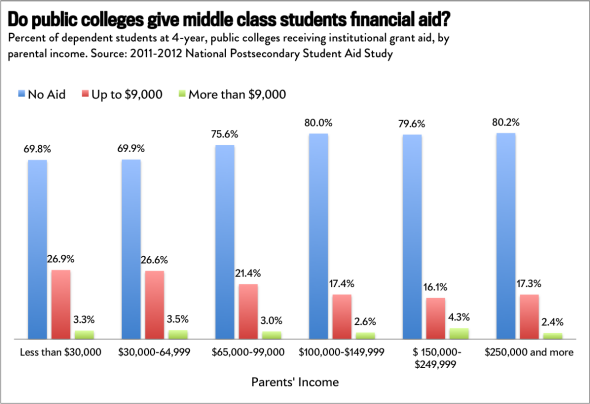
It’s a common myth that financial aid is only for low-income students, and if you make too much money, you have no chance of receiving financial aid.
But according to a recent analysis by Slate, this couldn’t be further from the truth.
In fact, both public and private colleges award financial aid to a significant percentage of middle-class students.
While college is extremely expensive, there’s a lot of free money out there going unclaimed.
In fact, according to a new analysis by NerdScholar, U.S. high school graduates left over $2.9 billion in free federal grant money on the table last academic year.
How’d they miss out on the free money?
They didn’t fill out the Free Application for Federal Student Aid (FAFSA).

Applying for financial aid can get confusing.
It can be difficult for families to keep track of all the different types of financial aid available, from grants to student loans.
But this helpful infographic from Southern New Hampshire University makes it a bit easier.

If you have a child in college this coming year, it’s time to start filling out the Free Application for Federal Student Aid (FAFSA) at fafsa.gov.
When completing the application, it’s important to make sure you’re not making any major mistakes that could jeopardize your student’s chances of receiving financial aid.
Check out the infographic from TurboTax to find out 6 most common mistakes people make on the FAFSA so that you can maximize your chance of receiving grants, work-study, and other forms of financial aid to help pay for college.
We’ve touted community college as a way to significantly reduce college costs, by transferring to a 4-year college after two years to earn your bachelor’s degree.
And a new proposal President Obama announced today makes community college an even more financially responsible option. The plan, called “America’s College Promise,” would make two years of community college free for eligible students of all ages.
As college costs have risen significantly faster than the cost of other goods and life purchases over the past two decades, many have questioned how colleges can justify the increased burden on students and families. While financial aid has increased to help students afford college and programs such as Income-Based Student Loan repayment have been touted […]
With the cost of college topping $60,000 at some schools, it may seem impossible for regular families to afford higher education.
But there are still plenty of quality colleges for half the cost. Kiplinger recently released a list of the best value colleges that still cost under $30,000 per year, all of which provide a great bang for your tuition buck.
While the government claims to be working to make college more affordable for students, actions speak louder than words.
The House of Representatives voted last week to cut $303 million from the federal Pell Grant program–a program that provides low-income students with grants for college.
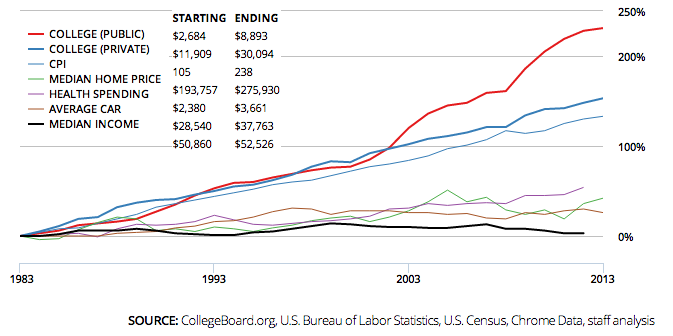
Everyone knows college costs are up, but how does that rise compare to the increase in prices of other life purchases, like cars, housing and consumer goods?
This chart shows how the rise in college tuition at public and private universities compares to the increase in cost of items in the consumer price index (CPI), homes, cars, and healthcare as well as the median income.
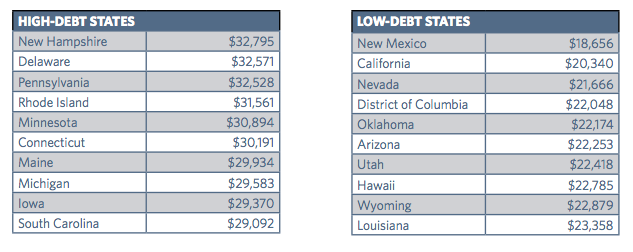
Students are graduating college with more debt than ever before, with the average college graduate leaving school with $28,400 in student loans.
But in some states, students are graduating with debt levels much higher than that, with debt in 6 states topping $30,000.
A new report from The Institute for College Access & Success’ Project on Student Debt shows that average student debt varies widely by state, ranging from $18,656 to as much as $32,795 per student.