How do colleges decide which students should receive financial aid and how much they should receive? Despite the increase in colleges using net price calculators and other reforms to make the process more transparent, financial aid remains a mystery to parents and students–it’s still a “apply, wait and see” type of game. Now, colleges are […]
We’ve discussed the benefits of attending college at length, but we’re always quick to point out that even though college degrees are a good investment in your future, it doesn’t mean they’re worth going hundreds of thousands of dollars into debt for.
This funny video from YouTube personality Ryan Higa shows the downsides of college for many students and graduates: underemployment, massive student loan debt, stress, and studying subjects that don’t apply to your future career.
It’s no secret that college is a huge investment in your future, and costs are rising at most colleges and universities. With the price so high and student loan debt increasing, it’s never been more important to be careful how you spend your college dollars. But which colleges pay off? Are 96% of U.S. colleges […]
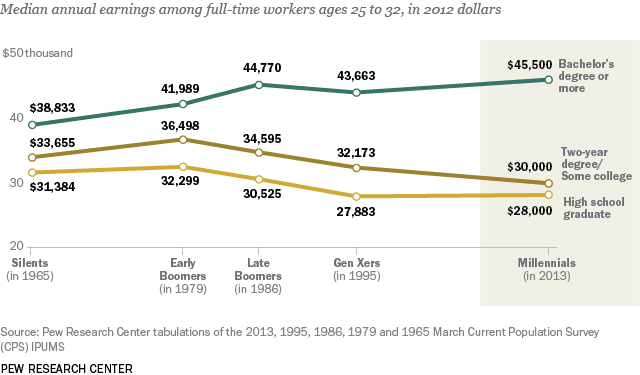
With college being such a huge investment, it’s natural to question whether it’s worth the money–or whether you’re better off just working and saving thousands or hundreds of thousands on a degree.
Of course, the value of a college degree can vary depending on college, cost, major, and what the student actually does with the degree. Still, research backs up the claim that college is worth the investment.
This doesn’t mean you shouldn’t be smart about how you spend your college dollars, but these statistics clearly prove that getting your Bachelor’s degree is a smart investment in your future.

We see a lot of students get their heart set on one particular college, only to end up disappointed when they realize they can’t afford it.
As much as parents may try to reason with starry-eyed students, it can be difficult for 17- and 18-year-olds to understand the long-term impact of significant college debt.
This infographic from Affordable Online Colleges shows the benefits of looking beyond your dream school and remembering that prestige isn’t everything when it comes to choosing a college.
Whether you or your child is preparing for college or already enrolled, your family can benefit from working with a financial aid consultant to save time and money on college.
Here are 9 reasons you should consider working with a financial aid consultant.
Looking for an affordable college? Check out some of the schools in the State University of New York (SUNY) system.
Even if you don’t live in New York state, these colleges offer a great value for your tuition dollar.
In fact, nine SUNY schools made Kiplinger’s 2014 list of ”Top 100 Best Values in Public Colleges.” Read on to find out which other schools made the list of affordable, quality schools for both in- and out-of-state students.
When applying for college, it can be overwhelming to figure out how you’re going to afford a 4-year degree.
One of the best things you can do to help pay for college is to be diligent in your search for grants and scholarships.
Check out some of these top scholarship search engines that make it easier to find free money for college.
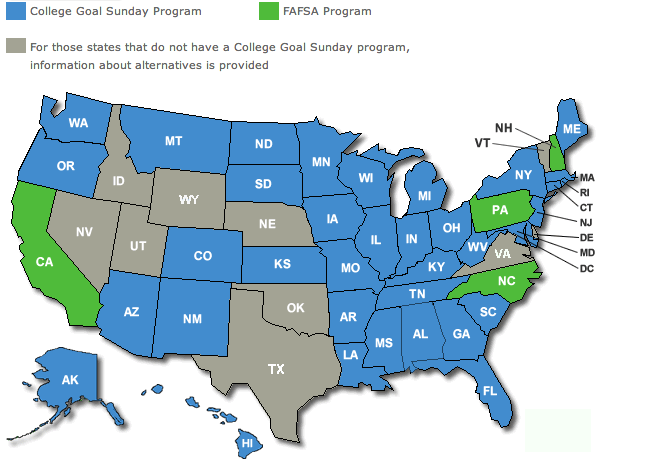
Need help filling out your FAFSA? There’s likely a FAFSA filing event happening near you in the next couple of months.
Check out this map and click on your state for a list of locations, dates, and times for events happening in your state.
Compared to private student loans, whose interest rates vary depending on the borrower’s credit history, federal student loans are a steal. But according to USA Today, a large percentage of private loan borrowers don’t maximize their borrowing of federal student loans.
In fact, the newspaper found that more than half of private loan borrowers failed to max out on federal student loans, and a quarter didn’t take out any federal loans.
This is quite alarming and demonstrates the need for education about the differences between federal and private student loans. Unlike federal student loans, private student loans can have variable interest rates, some greater than 18%. This substantially increase the total amount you repay.