Student debt remains an enormous societal and economic problem, with the average college graduate leaving school with $29,400 in loans, according to College Access and Success. It would be one thing if these graduates were entering an economy with many high-paying jobs available, but that simply isn’t the case, Charles Stevens writes in a fantastic […]
Many of the nation’s top universities, such as Harvard, Stanford and Duke, are lauded for having need-blind admissions policies, meaning they don’t take into account a student’s ability to pay for college when making admissions decisions. These schools say the policy a way to make sure the best students are accepted because of their merit, […]
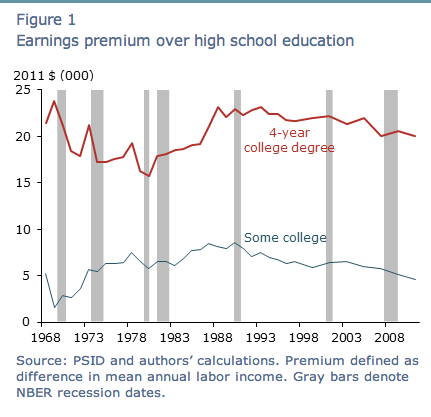
We’ve stressed that a college degree is a good investment despite its high cost. Now, we know exactly how much it’s worth: an extra $830,000 in your pocket, according to the Federal Reserve Bank of San Francisco. College grads earn 61% more per year According to the study, college graduates earned on average about $20,050 (61%) more […]
It’s an age-old question that’s been debated by philosophers from Socrates to The Notorious B.I.G.: Does mo’ money equal mo’ problems? It just might, if that money is being taken out to pay for college. Graduates with student debt are less happy Many students and families think that attending a prestigious, well-known college is the […]
Getting a job during college is a great way to reduce costs, reduce your student loans and make college more affordable.
In the video below from ABC News, Jordan Goldman of Unigo.com, a college review website, offers some of his tips on where to find on-campus and off-campus jobs, what type of jobs are best and how to make the most of your experience.
Applying for scholarships, grants and other forms of financial aid to help pay for college can be overwhelming for many students and families. And with the cost of college rising rapidly, there’s no shortage of students applying. The internet has made this a lot easier, but not all financial aid websites are created equal. Tess Clarke, a guidance […]
College applications were down this year at many top colleges, including Harvard and Dartmouth. This has led some in higher education to worry whether we’ll start seeing fewer people completing college degrees. It’s even caused some colleges to be forced to close. Law schools cutting tuition to attract students Many law schools have seen similar declines […]
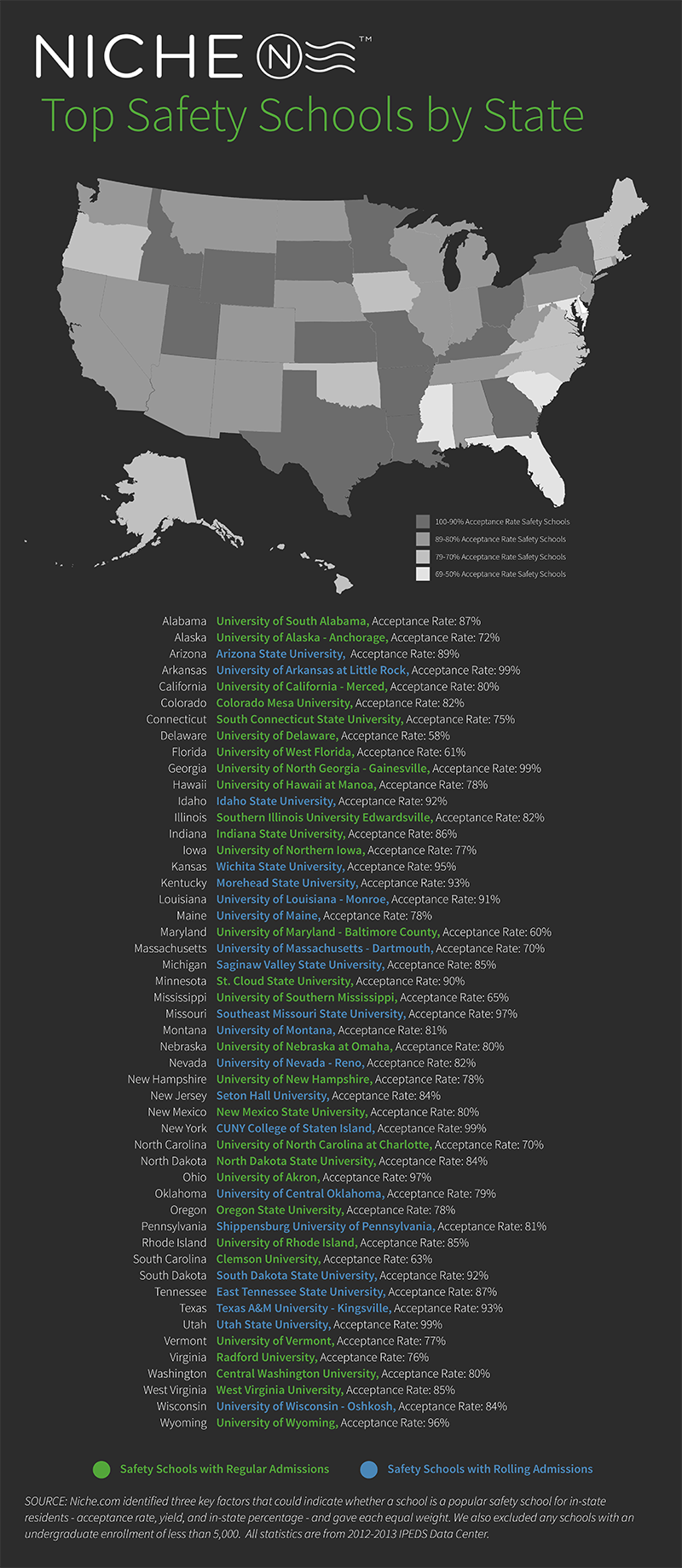
‘Safety schools,’ or colleges considered back-ups to students’ top choices, get a bad rap.
But as many students have found, attending a college that isn’t your first choice can be a great way to save money and avoid student loan debt.
Even as college costs rise, millions of students are missing out on the opportunity to get free money for college.
According to an analysis of federal data by Mark Kantrowitz, senior vice president at Edvisors Network, about 2 million students could have qualified for the need-based Federal Pell Grant during the 2011-12 academic year.
Of that group, 1.3 million would have qualified for a full Pell Grant of $5,645 for the 2013-14 academic year. That’s a free $22,580 over 4 years. If these students had instead borrowed loans to cover that amount, they’d have to pay it all back, plus interest.
So why didn’t these student receive this free money for college?
They didn’t file the Free Application for Federal Student Aid (FAFSA).
One of the knocks against community colleges has been that students who complete two-year degrees are less likely to continue on and complete their bachelor’s degree than their peers at four-year colleges. This was confirmed back in 2009, when Bridget Terry Long and Michal Kurlaender found that students who initially began at community colleges were 14.5% less likely […]